


The Queen is a chess piece that is always placed on d1 (for the Whites), and d8 (for the blacks). In chess, the Queen piece is the most powerful and versatile piece on the board, as it combines the movements of the Rook and the Bishop. Besides this, it has the highest value on the board. So usually it is not the best idea to trade it or sacrifice.
But while it offers incredible opportunities to control the game, misusing the queen can lead to quick losses.
In this guide, we’ll break down exactly how the queen moves, how to use it effectively, and common mistakes to avoid.
Table of Contents
How can the Queen move and capture in chess
The queen can move any number of squares in a straight line horizontally, vertically, or diagonally. This means the queen can cover large distances quickly, making it a critical piece for both attack and defence.
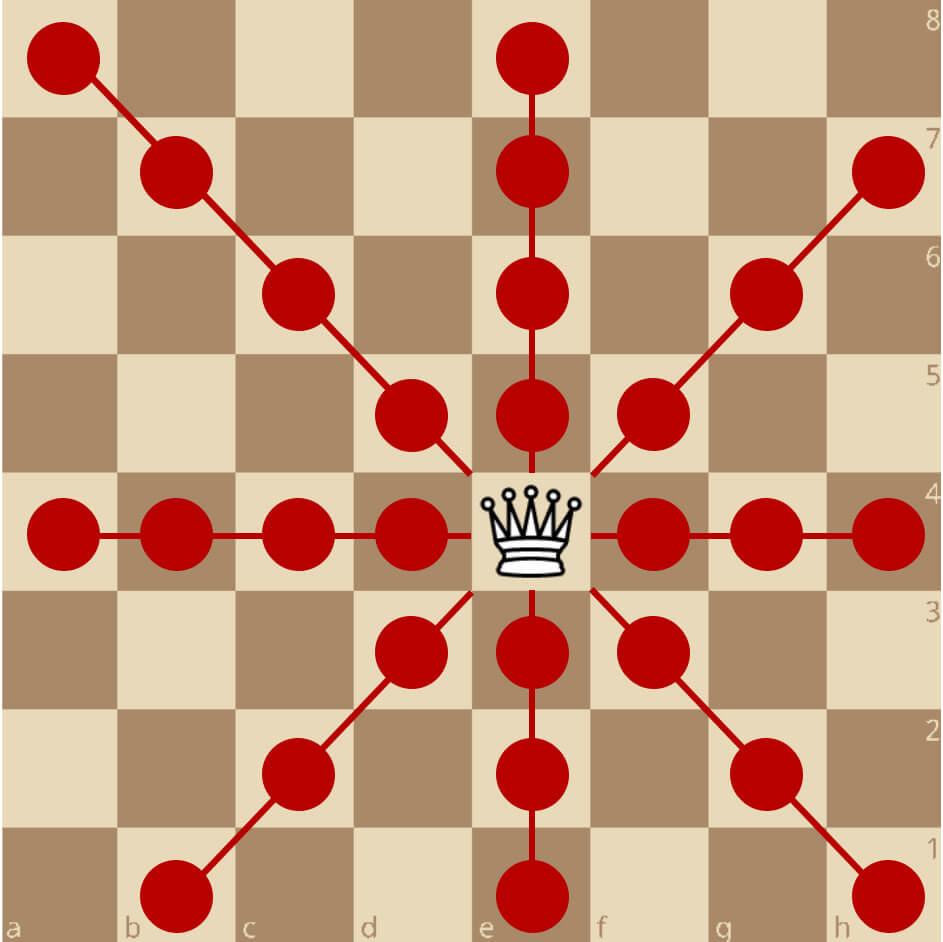
However, the Queen doesn’t have the knight moves, the queen cannot jump over other pieces. If there’s a piece in its path, the queen is blocked. When capturing, the queen simply moves to the square of the opposing piece, removing it from the board. This capturing ability in any direction gives the queen a unique advantage, allowing it to threaten multiple pieces at once.

In the second chess diagram we see an example of attacking many pieces at the same time, in chess this is a called a “fork“, which is a great tactic. With Queens, doing forks is very easy.
Strategic tips for moving the Queen effectively
The queen’s versatility makes it a powerful tool in your chess strategy, but it’s important to use it wisely. Here are some key tips to help you get the most out of your queen without putting it at unnecessary risk:
1. Avoid moving the queen too early
One of the most common mistakes beginners make is bringing the queen out too soon. While it may seem tempting to launch an early attack, an exposed queen can become an easy target for your opponent’s minor pieces. Instead, focus on developing your knights and bishops first. So try to keep your queen safe until the middle game.
2. Control the centre of the board
The queen is most effective when it occupies or influences the central squares (d4, d5, e4, e5). From the centre, the queen can access more squares and exert pressure on both sides of the board. However, always ensure it’s well-supported by other pieces to avoid becoming overextended.
3. Use the queen to support other pieces
The queen should not be used as a lone attacker. Instead, it works best when coordinating with other pieces. For example, pairing the Queen with a Rook or Bishop can create strong threats and open up tactical opportunities such as forks, pins, and skewers.
4. Be cautious with queen trades
Trading queens can change the nature of the game significantly. Before exchanging Queens, consider how it will affect your position. Generally, if you are ahead in material, trading queens can simplify the board and make it easier to convert your advantage into a win. However, if you are behind, keeping the queen may give you more chances to mount a comeback.
5. Utilise the queen in defence
The queen is not just an offensive piece; it can also play a crucial defensive role. It can guard critical squares, support weaker pieces, and help prevent checkmate threats. A well-placed Queen can hold your position together when under attack.
By keeping these strategic tips in mind, you’ll be able to maximise the queen’s potential and avoid common pitfalls. The key is to balance its offensive power with strategic positioning and solid support from your other pieces.