


If you’re looking for the best defense for Black against 1.d4, you’re not alone. Many players find it harder to face than 1.e4 because it often leads to slower, more positional games. You won’t be able to rely on quick tactics or early traps here — instead, you’ll need a solid and well-prepared plan.
There isn’t one single “best” move after 1.d4. Strong players use several different options, each with its own strengths and weaknesses. Some lead to sharp positions, others to quiet, strategic games. What works best depends on how you like to play and how much time you’re willing to spend learning theory.
This article will walk you through the main replies to 1.d4, show you how they work, and help you choose one that fits your style. Let’s begin with a quick overview.
Quick comparison table of black’s main replies to 1.d4
Before going deeper into each opening, here’s a simple comparison of the most common replies. This chart should help you get a quick idea of what each defence offers and which ones might suit you best.
| Opening | First Moves | Style | Suitable For | Theory Level | Key Risks |
| Nimzo-Indian | 1.d4 Nf6 2.c4 e6 3.Nc3 Bb4 | Flexible, balanced | Intermediate–Advanced | High | Requires knowledge of various setups |
| Queen’s Gambit Declined | 1.d4 d5 2.c4 e6 | Solid, classical | All levels | Medium | Can lead to passive positions if mishandled |
| King’s Indian | 1.d4 Nf6 2.c4 g6 3.Nc3 Bg7 4.e4 d6 | Sharp, attacking | Intermediate–Advanced | High | Risky if you misjudge the timing of your attack |
| Grunfeld | 1.d4 Nf6 2.c4 g6 3.Nc3 d5 | Dynamic, counterattacking | Advanced only | Very High | Complex positions, easier to misplay |
| Slav | 1.d4 d5 2.c4 c6 | Safe, structured | All levels | Low–Medium | Can become too passive if you don’t push early |
| Dutch | 1.d4 f5 | Unbalanced, aggressive | Club players, blitz | Low | Weakens kingside, hard to play if you fall behind |
Each of these replies is playable and respected. The important part is picking the one that suits how you think and play. But don’t worry, I’ll explain how to do it.

Nimzo-Indian Defence (1.d4 Nf6 2.c4 e6 3.Nc3 Bb4)
The Nimzo-Indian Defence begins when Black plays 3…Bb4, pinning your opponent’s knight on c3. This pin stops White from easily pushing e4, which is often their main goal. You’re not just stopping e4 — you’re also putting pressure on White’s centre while getting ready to develop your own pieces quickly.
This defence gives you a flexible structure. You don’t commit your central pawns straight away, which means you can later choose between different plans depending on what White does. That flexibility makes the Nimzo-Indian a long-term weapon, but it also means you’ll need to know how to handle different pawn setups.
You’ll benefit most from the Nimzo-Indian if you like slow, strategic battles with moments of sharp tactics. It’s a good fit if you’re at an intermediate level or higher and are willing to spend some time learning how different positions work. It’s not ideal for complete beginners, since the ideas can be subtle and it often leads to long, unbalanced middlegames.
Key plan for Black
- Put pressure on the c3 knight and the e4 square.
- Choose a pawn setup later: …d5 for a central fight, or …c5/…b6 for a more fluid setup.
- Castle early and prepare to play …Nc6 or …Na6 to target weak squares.
One of the main problems in the Nimzo-Indian is rushing the decision to take on c3. If you do it too early without a good reason, you often give up the bishop pair without gaining anything. That can leave you stuck with a passive position while White slowly improves. Another mistake is hesitating with your central pawns — waiting too long to decide between …d5, …c5, or …b6 can lead to a setup that lacks bite. Some players also forget how to handle doubled pawns after …Bxc3 — they either underestimate the bishop pair or overestimate the structural damage. Misplacing your pieces is another issue: putting the knight on the wrong square or wasting time with slow moves can give White a free hand in the centre. To avoid this, you need to understand typical pawn breaks and middlegame ideas, not just the opening moves.
Pros of Nimzo-Indian Defence:
- Stops White from playing e4 early.
- Gives you a lot of control over the centre without needing to rush.
- Leads to unbalanced, playable positions where both sides can fight for a win.
Cons of Nimzo-Indian Defence:
- You often give up the bishop pair.
- White’s central pawns can become strong if not handled carefully.
- Requires a solid understanding of typical middlegame plans and pawn structures.
If you’re looking for a reply to 1.d4 that gives you both flexibility and long-term chances to outplay your opponent, the Nimzo-Indian is one of the most reliable choices you can prepare.

Queen’s Gambit Declined (1.d4 d5 2.c4 e6)
The Queen’s Gambit Declined is one of the most traditional and well-tested defences to 1.d4. By playing 2…e6, you keep your central pawn on d5 and avoid the risks of grabbing the c4 pawn. This setup is about building a solid structure first, then slowly fighting for space and activity.
You don’t go after the centre with tactics straight away. Instead, you challenge it from a strong base, using piece development and solid pawn moves to hold your ground. Over time, if White overextends or runs out of ideas, you’ll often find good counterplay without having taken much risk.
This defence is ideal if you want to keep things simple and solid without needing to memorise sharp lines. It works well at all levels, including beginners who want to build good habits around piece activity and central control. It’s also reliable in tournament play if your goal is to get a stable middlegame every time.
Key plan for Black
- Develop your bishop to e7 or sometimes b4, then castle.
- Play …Nf6 and often …c5 to challenge the centre.
- Be patient — the goal is not to win the centre early, but to equalise and wait for mistakes.
One of the most frequent problems is being too passive. After castling, you might find yourself without a clear plan if you haven’t challenged the centre early enough with …c5 or …e5. Another mistake is misplacing the light-squared bishop — sometimes players rush to develop it before deciding whether it belongs on e7 or b4. If you’re not careful, you can also let White dominate the centre too easily by failing to respond when they prepare e4. And although it’s solid, don’t fall into the habit of just shuffling pieces — you still need active play to hold equality.
Pros of Declined Queen’s Gambit:
- Very solid and hard to break.
- Easy to understand — logical development and clear pawn structure.
- Can be used consistently across levels and time controls.
Cons of Declined Queen’s Gambit:
- Less dynamic than other choices — it’s harder to win if White plays accurately.
- You may need to defend slightly cramped positions if you delay counterplay.
- Requires patience and good positional understanding to avoid getting squeezed.
The Queen’s Gambit Declined doesn’t give you quick wins, but it gives you a game — and often, that’s all you need to outplay someone who overreaches.
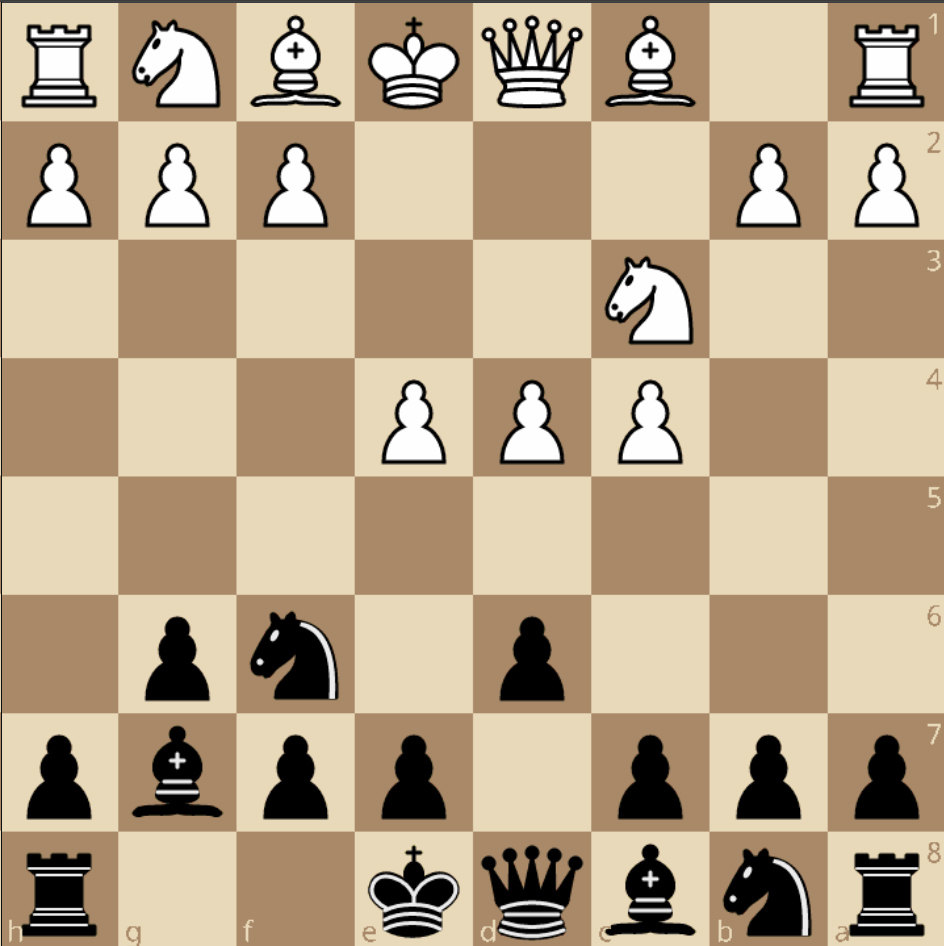
King’s Indian Defence (1.d4 Nf6 2.c4 g6 3.Nc3 Bg7 4.e4 d6)
The King’s Indian Defence is a hypermodern opening where you allow White to build a strong-looking centre — and then you try to break it down. You don’t fight for central space right away. Instead, you develop your kingside pieces, castle early, and later try to challenge the centre with moves like …e5 or …c5.
This approach often leads to closed or semi-closed positions where plans are more important than fast development. You’ll usually be attacking on the kingside while White tries to expand or break through on the queenside.
You’ll enjoy the King’s Indian if you’re comfortable in sharp, unbalanced positions and you’re not afraid to wait before striking. It’s especially effective for players who like attacking chess and don’t mind being slightly cramped at first. It’s less suited to beginners, since the positions can quickly become very tactical or one-sided if you don’t know the key ideas.
Key plans for Black
- Castle quickly, then play …e5 or …c5 depending on White’s setup.
- Prepare a kingside attack with moves like …f5, …Nh5, …Nf6, …g5, and …f4.
- Keep your dark-squared bishop on the long diagonal — it’s a key piece in many lines.
A big mistake is going for the kingside attack too soon. If you push pawns like …f5 and …g5 without proper preparation, you’ll weaken your king’s position and give White easy targets. Another problem is being too passive. Waiting too long to play …e5 or …c5 can let White dominate the centre and cut off your pieces. On the flip side, some players delay development — if you forget to connect your rooks or leave the queen undeveloped, you might find yourself under pressure before your attack even begins. You also need to be very aware of White’s queenside plans; if you ignore that side of the board, you might get pushed back without enough counterplay.
Pros King’s Indian Defence
- Leads to sharp, dynamic positions where you can play for a win.
- Gives you a clear plan: kingside attack, pressure on the centre.
- Still used at the top level in classical and blitz formats.
Cons King’s Indian Defence
- Requires good calculation and timing — easy to overextend.
- Can leave you cramped if you play too passively early on.
- Demands preparation and positional understanding, especially in slower games.
If you want a defence where you take the fight to your opponent and don’t mind being slightly worse if they play accurately, the King’s Indian can give you some of the most exciting positions in chess.

Grunfeld Defence (1.d4 Nf6 2.c4 g6 3.Nc3 d5)
The Grunfeld Defence takes a different approach from other hypermodern openings. Instead of just allowing White to build a big centre, you actively challenge it with 3…d5. You let White play e4 and take over the middle of the board — and then you try to break it down with fast piece activity and central pressure.
The key idea is that you won’t try to hold the centre with pawns. You’ll attack it with your pieces, aiming for fast development and long-term counterplay. This can lead to open positions with sharp lines and a lot of tension in the centre.
This defence is best suited for advanced players who are confident in calculation and enjoy dynamic play. The positions are open and tactical, and they often revolve around timing and precision. If you like to play actively and don’t mind learning sharp theory, the Grunfeld will give you plenty of chances to fight for the initiative.
Key plans for Black
- Exchange on d4 and pressure the centre using pieces (e.g. …Bg7, …c5, …Nc6, …Qa5 or …Rb8).
- Use the g7-bishop to attack the long diagonal.
- Be ready to strike at the centre with …e5 or …c5 at the right moment.
The most common problem in the Grunfeld is overestimating the strength of your pressure. If you give White too much time, their central pawns can start to roll, and then it becomes very difficult to break them down. Another issue is poor piece coordination — it’s easy to get into trouble if your pieces aren’t all working together to hit the centre. You can also fall behind in development if you try to hold on to material after an early capture, especially if White sacrifices a pawn for activity. Misplaying the queenside is another risk; sometimes players over-focus on the centre and forget to deal with White’s expanding pawns on the flank.
Pros of Grunfeld defence
- Offers clear, aggressive plans against White’s centre.
- Leads to sharp, tactical play with chances to win against prepared opponents.
- Strong reputation at the top level.
Cons of Grunfeld defence
- Demands accuracy — timing and move order are critical.
- Risky if you misjudge White’s attack or central control.
- Theory-heavy — requires regular study to keep up with new ideas.
The Grunfeld isn’t for everyone, but if you like complex, tactical battles and want to actively fight for control of the board, it can be a powerful choice in your repertoire.

Slav Defence (1.d4 d5 2.c4 c6)
The Slav Defence is one of the most solid and dependable responses to 1.d4. By playing 2…c6, you support your central pawn on d5 and prepare to develop your pieces without weakening your position. It avoids early tactical complications and focuses on building a strong structure first.
You don’t immediately challenge White’s setup with sharp moves. Instead, you aim to equalise comfortably and wait for your opponent to overreach. This opening is all about being solid, accurate, and patient — it’s a way to play for equality without taking big risks.
The Slav works well for all levels. It’s especially useful if you prefer to play safely and avoid sharp, theoretical fights. Beginners often like it because it follows simple principles: develop your pieces, control the centre, and keep your position secure. More advanced players use it to steer the game into quiet waters and then slowly try to outplay their opponents.
Key plans for Black
- Develop your light-squared bishop outside the pawn chain (often to f5 or g4) before playing …e6.
- Build a solid centre with …e6 and …Nf6.
- In some lines, aim for a break with …c5 or …e5 when fully developed.
A typical mistake is blocking in your own bishop too early with …e6. One of the key benefits of the Slav is getting that bishop out before committing to …e6, and skipping this step can lead to a cramped position. Another issue is becoming too passive. If you play …a6 or …h6 without a clear purpose, you’ll waste time and fall behind in development. Some players also delay queenside development or forget to prepare breaks like …c5 properly, which can leave you stuck with no active plan. While it’s a solid setup, you still need to make active decisions to avoid getting slowly outplayed.
Pros of the Slav defence
- Very solid and hard to break down.
- Simple, logical development that’s easy to understand.
- Low maintenance — not as much theory as sharper lines.
Cons of the Slav defence
- Can be slightly passive if you don’t develop actively.
- Harder to create winning chances against strong, cautious players.
- Some lines are drawish at higher levels.
The Slav is a good choice if you want something reliable that doesn’t require heavy preparation. You’ll get a safe position where mistakes are rare — and that’s often enough to beat most players.

Dutch Defence (1.d4 f5)
The Dutch Defence is one of the few replies to 1.d4 where Black immediately fights for kingside space. By playing 1…f5, you take control of the e4 square and signal that you’re not aiming for a slow or balanced game. It often leads to unbalanced positions, where both sides can attack early.
Unlike many other replies to 1.d4, the Dutch doesn’t try to hold the centre with pawns like …d5 or …e6. Instead, it aims to seize control with piece activity and kingside pressure. It’s a good way to take your opponent out of standard theory and force them to think from the start.
The Dutch suits players who like sharp, aggressive games and don’t mind taking risks. It’s especially popular in blitz or rapid games where time pressure makes it harder for White to punish the early weaknesses. If you’re not looking to study long lines or play drawish positions, this opening can give you practical chances with little preparation.
One common mistake involves the Staunton Gambit (2.e4), where White immediately strikes in the centre. If you’re not prepared, this line can catch you off guard and lead to fast trouble. Another issue is the weakness of the e6 square — if you delay development or push too many pawns on the kingside, you might find yourself in a worse position without a clear plan.
Pros of the Dutch Defence
- Avoids mainstream theory and puts your opponent into unfamiliar positions.
- Offers real winning chances, especially in faster time controls.
- Gives you attacking ideas early in the game.
Cons of the Dutch Defence
- Weakens your kingside from move one — especially the e6 square.
- If the attack doesn’t work, your position can collapse quickly.
- Many setups require precise play, and one mistake can be costly.
The Dutch isn’t the safest reply to 1.d4, but if you’re looking for a way to play actively and catch your opponent off guard, it’s a valid and underrated weapon.
Which opening should you play?
If you’re not sure where to start, try choosing one or two openings that seem to match your style and experiment with them in your games. You don’t need to memorise long lines or study dozens of variations. What matters more is understanding the main plans, typical pawn structures, and common mistakes in each defence.
Play a few games with one opening, review what went wrong or what felt natural, and then decide whether to stick with it or try something else. Over time, this practical approach will give you much better results than relying on memorised moves alone.