


If you want to take control of the game from the first move, aggressive chess openings can help you do that. These openings are designed to put immediate pressure on your opponent, open lines for attack, and lead to sharp positions. Instead of waiting for mistakes, you aim to create problems that force your opponent to defend from the start.
Aggressive openings work best when you understand the ideas behind them. They usually involve quick development, centre control, and attacking plans that give you the initiative. Some of them involve gambits, where you sacrifice material to get a lead in activity or expose your opponent’s king.
In this guide, you’ll learn which openings are considered aggressive for White, what makes them effective, and which ones may suit your playing style. Every opening here is chosen with one goal in mind — to help you start strong and play actively from the very beginning.
Table of Contents
What makes a chess opening aggressive?
An aggressive chess opening tries to create threats early in the game. As White, this means using your first move to put pressure on Black instead of playing passively or waiting. Most aggressive openings share a few clear features.
First, they aim for quick development. You bring your pieces out fast, especially knights and bishops, and prepare to castle early if needed. This helps you control space and connect your rooks.
Second, they focus on centre control, usually by pushing pawns to e4 or d4. This gives your pieces more room to move and limits your opponent’s options.
Third, many aggressive openings involve sacrifices, especially gambits. You might give up a pawn to open lines, speed up your attack, or pull your opponent’s king into a bad position. These trades are not random — they are based on clear attacking plans.
Lastly, aggressive openings often lead to open or semi-open positions. These make it easier for you to launch attacks and harder for your opponent to hide their king behind a solid defence.
When you choose an aggressive opening, your goal is to take the lead early and force your opponent to react. It works best if you know the common traps, follow basic opening principles, and understand what to do if your plan doesn’t work right away.
Top 9 Most Aggressive Chess Openings for White
1. King’s Gambit
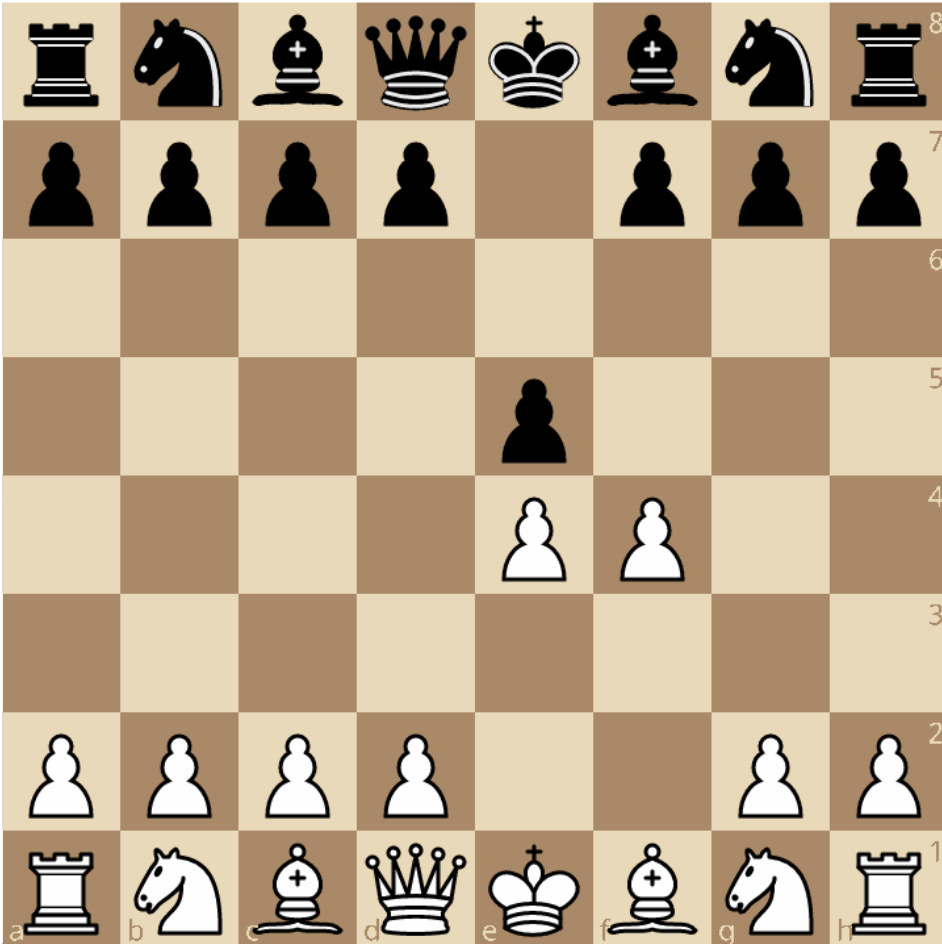
Moves: 1.e4 e5 2.f4
The King’s Gambit is one of the oldest attacking openings for White. You offer your f-pawn to break open the centre and start attacking right away. If Black accepts the gambit with 2…exf4, the position becomes sharp very quickly.
Your main goal is to control the centre and target the weak f7 square. You usually continue with 3.Nf3 to stop checks like …Qh4+ and prepare to castle quickly. Another option is 3.Bc4, which targets f7 directly.
This opening works best when your opponent isn’t fully prepared. It often leads to open lines, exposed kings, and fast development for White. But you also need to be careful — your own king position becomes weaker, especially if you don’t castle soon or if your attack doesn’t work.
Best for: players who enjoy sharp positions and are ready to take risks.
Main risk: if Black defends correctly, you can end up with a weaker structure and no compensation.

2. Vienna Game (with Vienna Gambit)
Moves: 1.e4 e5 2.Nc3 Nf6 3.f4
The Vienna Game gives you a chance to develop quickly while also preparing an early kingside attack. When you play 3.f4, it becomes the Vienna Gambit. This move puts pressure on the centre and aims to open the f-file if Black captures the pawn.
Unlike the King’s Gambit, the Vienna Gambit delays Nf3 and plays Nc3 first. This small change can catch many opponents off guard, especially if they expect more common openings like Ruy Lopez or the Italian Game.
If Black accepts the gambit with 3…exf4, you often continue with Nf3 and Bc4 to build pressure on the f7 square. You can also castle quickly and use the open f-file for your rook. Even if Black doesn’t accept the gambit, you still get a solid position with chances to attack.
Best for: players who want an aggressive option that is less well-known and easier to learn than the King’s Gambit.
Main risk: if you don’t follow up actively after the gambit, you may fall behind in development.

Smith-Morra Gambit (vs Sicilian Defence)
Moves: 1.e4 c5 2.d4 cxd4 3.c3
The Smith-Morra Gambit is a sharp reply to the Sicilian Defence. When you play 2.d4 and then 3.c3, you offer a pawn to speed up development and take control of the board. This gambit helps you avoid the slower, more complex lines of the Sicilian.
If Black accepts the gambit, you quickly bring out your knight to f3, bishop to c4, and aim to castle early. Your pieces become active fast, and you usually get open lines for your rooks, especially on the c and d files. This gives you many chances to attack the black king, especially if it castles kingside.
This gambit puts pressure on Black to play very accurately. Even small mistakes can lead to quick attacks. You should be ready to use tactics and stay active. If the attack slows down or fails, you may be left with less material and no clear plan.
Best for: players who regularly face the Sicilian Defence and want to play actively instead of memorising long lines.
Main risk: if your opponent knows the correct defence, you can run out of attacking chances and fall behind in material.

4. Scotch Game
Moves: 1.e4 e5 2.Nf3 Nc6 3.d4
The Scotch Game is a direct way to challenge Black’s control of the centre. By playing 3.d4, you open the position and invite early exchanges. This often leads to faster piece development and more space for White.
After Black captures with 3…exd4, you usually continue with 4.Nxd4. This puts your knight in the centre and gives you quick access to open lines. You can follow up with moves like Nc3, Bc4, and 0–0 to build pressure. Since many players expect 3.Bb5 or 3.Bc4 instead, this move order can take them out of their preparation.
The Scotch Game avoids slower positions and keeps the focus on activity. It gives you clear, simple plans and avoids too much theory. It works well as a practical weapon, especially if you play quickly and keep the initiative.
Best for: players who want to avoid the Ruy Lopez and prefer open, tactical games.
Main risk: if Black defends correctly, the game can become equal quickly, and your early advantage may disappear.

5. Italian Game with Evans Gambit
Moves: 1.e4 e5 2.Nf3 Nc6 3.Bc4 Bc5 4.b4
The Evans Gambit is an attacking variation of the Italian Game. With 4.b4, you offer a pawn to pull the black bishop off the active diagonal. This creates time to build a lead in development and start an early attack.
If Black accepts the gambit, you usually respond with 5.c3 and then d4 to take over the centre. You can follow up with moves like Nf3, Bc4 (again), and castling kingside. With your pieces developed quickly and the centre under control, you can start targeting weak points like f7.
The Evans Gambit is effective at club level because many players don’t know how to defend against it. The pressure builds quickly, and even a small mistake from Black can lead to serious problems.
Best for: tactical players who enjoy open positions and fast-paced attacks.
Main risk: if Black returns the pawn and defends solidly, the game may slow down, and you lose your early pressure.

6. Danish Gambit
Moves: 1.e4 e5 2.d4 exd4 3.c3
The Danish Gambit is one of the most aggressive openings you can play as White. By offering one or even two pawns early, you aim to gain a huge lead in development and open lines for your pieces.
If Black accepts both gambit pawns (with 3…dxc3 followed by 4.Bc4 cxb2 5.Bxb2), you get two active bishops pointing at the kingside, plus quick access to the centre. You can follow up with Nf3 and 0–0, putting pressure on f7 and preparing to launch an attack.
This gambit works best when Black tries to hold on to the extra pawns and falls behind in development. If your opponent doesn’t know the key defensive ideas, you can win quickly. But the opening is risky — if Black gives the pawns back or plays accurately, your compensation disappears fast.
Best for: Players who want sharp positions and don’t mind taking risks to attack early.
Main risk: If the attack fails, you’re left down material with no long-term advantage.
7. Bird’s Opening
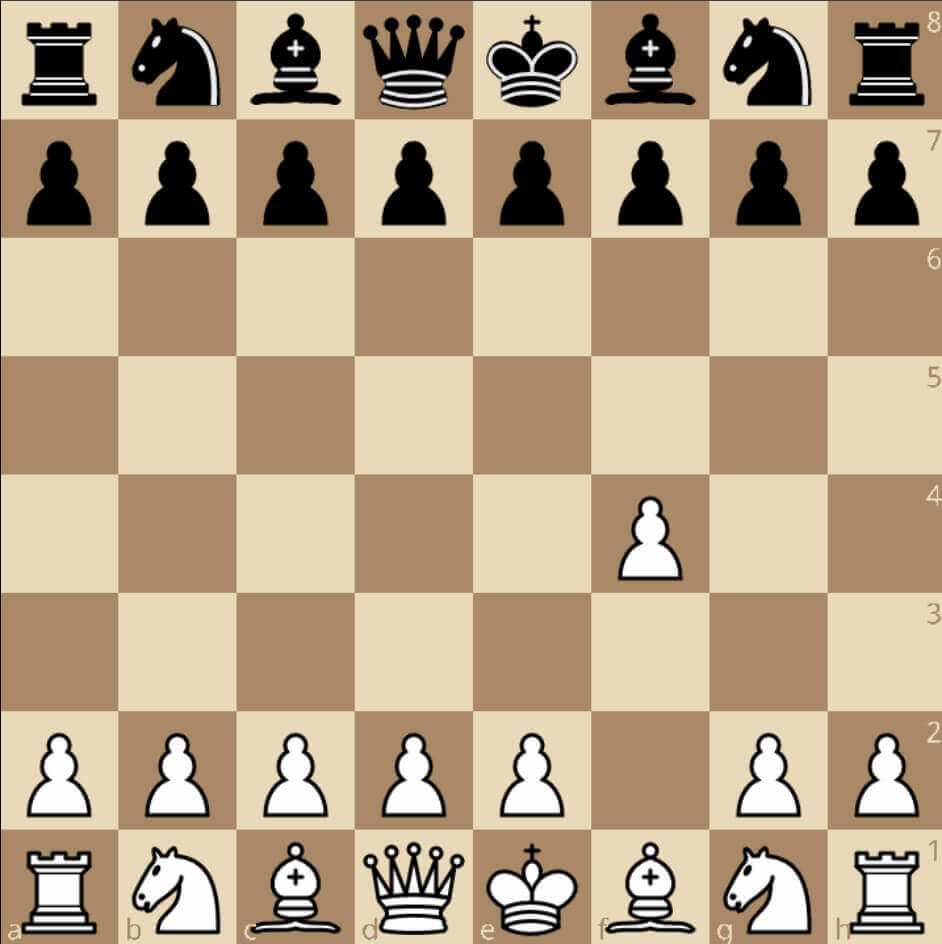
Moves: 1.f4
The Bird’s Opening starts with a flank pawn instead of a central one. It’s less common than 1.e4 or 1.d4, but it still leads to aggressive positions. By playing 1.f4, you aim to control the e5 square and prepare a kingside attack.
This setup is similar to the Dutch Defence, but in reverse. You often follow with moves like Nf3, e3, and g3, planning to fianchetto your bishop to b2. This gives you control over the long diagonal and supports pressure on the centre and kingside.
The opening can catch opponents off guard, especially if they don’t know how to handle flank openings. It gives you space and long-term attacking chances, but it also weakens your kingside early. If you delay castling or misplace a piece, it’s easy to fall behind.
Best for: Players who want to avoid theory-heavy openings and prefer original attacking setups.
Main risk: The early f-pawn push can make your king vulnerable if you don’t castle soon or if the centre opens too quickly.
8. Lay Down Sacrifice
The Lay Down Sacrifice isn’t a specific opening with a fixed move order. It’s a general strategy used in aggressive lines where you sacrifice material early to break open the opponent’s defence — usually around their king.
You often see this idea in gambits like the King’s Gambit, Danish Gambit, or Evans Gambit. For example, you might sacrifice a bishop on f7 or drop a central pawn to open lines for your queen and rooks. The key is to give up material only when it forces your opponent to weaken their king’s safety or fall behind in development.
To use this strategy well, you need to know typical tactics like discovered attacks, pins, and forced sequences. It works best when your opponent has no safe way to refuse the sacrifice and is forced to accept it.
Best for: Players who understand tactical patterns and want to create immediate pressure.
Main risk: If the sacrifice doesn’t lead to a strong attack, you’re simply down material with no compensation.

9. Ruy Lopez with Early d4 Push
Moves: 1.e4 e5 2.Nf3 Nc6 3.Bb5 a6 4.Ba4 Nf6 5.O–O Be7 6.d4
The Ruy Lopez is often seen as a solid and strategic opening, but with an early d4 push, you can turn it into an aggressive choice. Instead of playing slower moves like Re1 or c3 first, you push d4 quickly to open the centre and start active play.
After 6.d4, if Black captures (exd4), you can respond with Nxd4 and get strong central control. You also bring your pieces out faster, aiming to use the open lines for your bishops and rooks. This version of the Ruy Lopez gives you chances to put pressure on the centre and target weak squares like f7.
By pushing d4 early, you change the nature of the game. It becomes more tactical and less focused on slow manoeuvres. This suits players who want to avoid long positional battles and prefer clear, attacking ideas from the start.
Best for: Players who already use the Ruy Lopez but want a sharper version.
Main risk: If Black handles the centre well, your early activity might not lead to an advantage.
Which aggressive opening should you choose?
Not every aggressive opening suits every player. Some require more preparation, while others are easier to play without deep study. To choose the right one, you should think about your playing style and your level of experience.
If you’re a beginner, then start with openings that are easy to understand and follow clear principles like quick development and centre control. These openings give you good positions even if your opponent doesn’t make mistakes.
- Vienna game – easy to learn and often catches opponents unprepared.
- Scotch game – clear plans and simple piece development.
- Italian game with Evans gambit – teaches you how to use open lines and quick attacks.
For intermediate players who can handle more complex positions and are comfortable with tactical play, I recommend using gambits that require more precision and calculation. Those are:
- King’s gambit – very sharp opening; good if you’re confident in handling open positions.
- Smith-Morra gambit – useful if you often face the Sicilian Defence.
- Bird’s opening – flexible and less studied; good for players who like original ideas.
If you’re an advanced player, have experience with tactics, know how to punish weak moves, and can also recover if the position becomes unclear, then try:.
- Danish Gambit – leads to fast attacks, but needs strong follow-up.
- Lay down sacrifice – requires good timing and tactical skill.
- Ruy Lopez with early d4 – sharp, but works best if you understand positional ideas too.
Pick one or two openings that match your style and study them in more detail. Learn the common lines, ideas, and traps. This will give you confidence and help you get better results in your games.
If you liked this lesson and would like to study even more, then check the next lessons below or consider taking online chess lessons with a coach.