



You’ve played a few games, you know how the chess pieces move, and you’re starting to notice that the first few moves matter a lot. That’s exactly when learning a proper opening pays off.
A good opening helps you control the centre, get your pieces into the game quickly, and keep your king safe. The openings I’ve prepared in this list are easy to learn, so you shouldn’t have any problems mastering them.
How I Picked These Openings
Not every opening is worth your time as a beginner. Some require memorising 15+ moves before you even understand what you’re trying to do. Others fall apart the moment your opponent plays something unexpected. Every opening on this list I’ve chosen based on three things:
- Easy to learn. The move sequences are short and logical. You won’t need to memorise long lines to play them correctly.
- Teaches real chess. Each opening naturally puts into practice the core principles in chess: controlling the centre, developing your pieces early, and getting your king to safety. So you will not just be following a script, but also building good habits.
- Works as you improve. These aren’t tricks that only work against beginners, like the scholar’s mate. All of them are played at club and tournament levels, so you won’t need to abandon them once you get better.
The list also covers both sides of the board, three openings for Black and four for White, so you’re prepared no matter which colour you get.
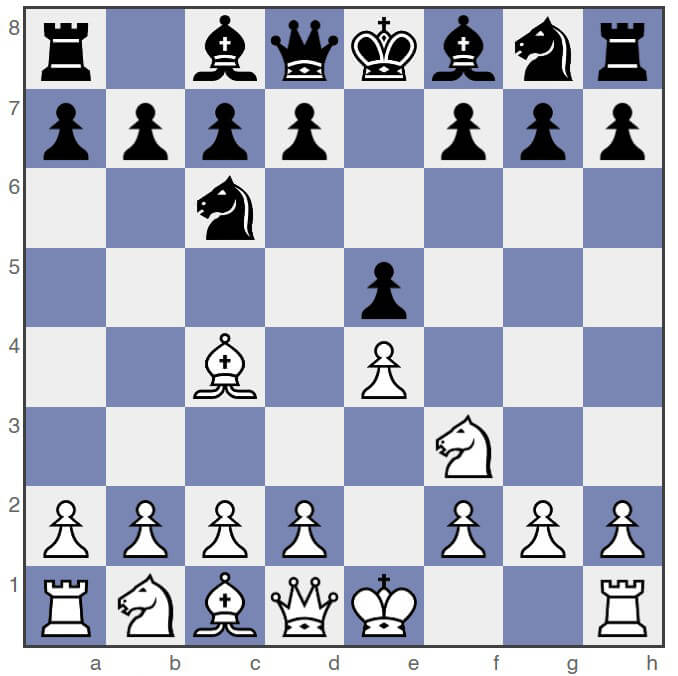
1. Italian Game (White)
Moves: 1.e4 e5 2.Nf3 Nc6 3.Bc4
The main idea of the Italian game is to take control of the centre with your pawn on e4, then bring out your knight and bishop to their most active squares. The bishop on c4 points straight at the f7 square, which is one of Black’s weakest points early in the game. From here, you’re ready to castle short and start building pressure.
The most common continuation is 4.c3 followed by 5.d4, pushing into the centre while your pieces are already developed and pointing at the right squares.
Best for: players who like open, active positions where both sides have chances early on.
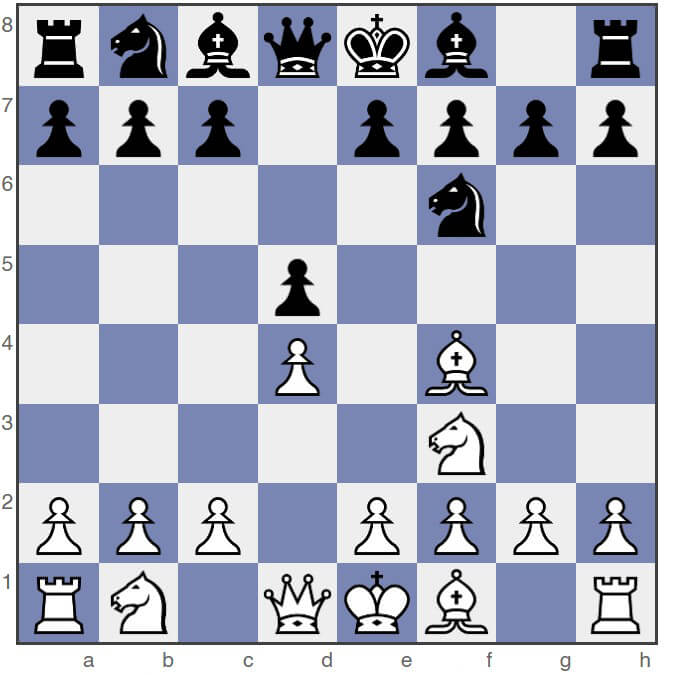
2. London System (White)
Moves: 1.d4 2.Nf3 3.Bf4
The London System is a setup-based opening, meaning you build the same structure regardless of what Black plays. You develop your pieces to safe, natural squares, support the centre with pawns on d4 and e3, and castle short. There are no sharp lines to memorise and no early traps to worry about.
Once the basic setup is in place, bring your bishop to d3 and knight to d2, then castle. After that, you can start thinking about a kingside push with e4 when the timing is right.
Best for: players who prefer solid, low-risk positions and want a reliable opening they can use against any response from Black.

3. Queen’s Gambit (White)
Moves: 1.d4 d5 2.c4
White offers a pawn on c4 to pull Black’s pawn away from the centre. Despite the name, it’s not a true gambit. If Black takes the pawn with 2…dxc4, White doesn’t lose material. You can easily win it back while gaining extra time to develop.
The typical plan is to follow up with Nc3, e3, Nf3, and Be2, then castle short. Your pieces find natural squares quickly and you end up with a solid, well-structured position in the centre.
Best for: players who prefer positional play and want to build long-term pressure rather than go for early attacks.
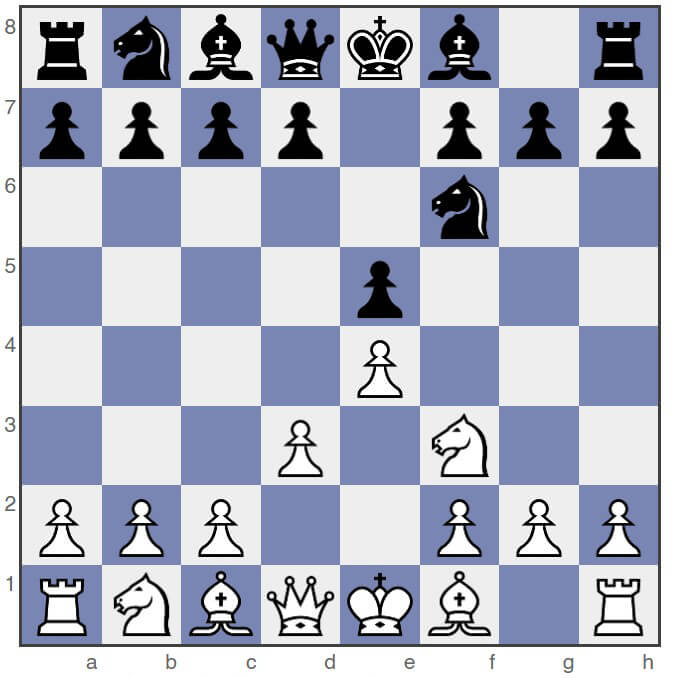
4. Scotch Game (White)
Moves: 1.e4 e5 2.Nf3 Nc6 3.d4
On move 3, White immediately challenges the centre by pushing d4. This opens the position early and leads to concrete, tactical play right away. After 3…exd4 4.Nxd4, White has a strong central presence and active pieces with clear targets to aim at.
The typical plan is to develop with Bc4 or Nc3 after recapturing on d4, then castle short. The open centre means both sides need to play accurately, which makes this a great opening for sharpening your tactical vision.
Best for: players who enjoy active, tactical games and want to get into the fight quickly rather than building up slowly.

5. Sicilian Defence (Black)
Moves: 1.e4 c5
One of the best openings for Black against e4 is to respond with c5, fighting for the centre from the side. This small difference has big consequences. Black avoids a symmetrical position and creates immediate imbalance, which gives both sides different plans to work with.
The most common continuation is 2.Nf3 and 3.d4, where White grabs central space and Black trades a c-pawn for a d-pawn. Black ends up with more pieces pointing at the centre, while White has a space advantage. It’s an unbalanced position where both sides have real winning chances.
Best for: players who are comfortable with complex positions and want to play for a win with Black rather than just holding a draw.
6. French Defence (Black)
Moves: 1.e4 e6 2.d4 d5
Black lets White build a strong centre, then immediately challenges it with d5 on move 2. The idea is to create a solid pawn structure and counterattack the centre rather than fight for it immediately.
After the opening moves, the game typically continues with 3.Nc3 or 3.Nd2 from White, and Black follows up with c5 to pressure White’s d4 pawn. This leads to a position with clear pawn chains on both sides, where Black plays on the queenside and White typically attacks on the kingside.
One thing to be aware of is that the c8 bishop gets blocked by Black’s own pawn on e6 and can be difficult to develop. Finding a good square for it, usually after pushing b6 and then Ba6 or Bb7, is one of the key challenges of playing the French.
Best for: players who prefer structured, strategic positions and don’t mind defending carefully before launching a counterattack.

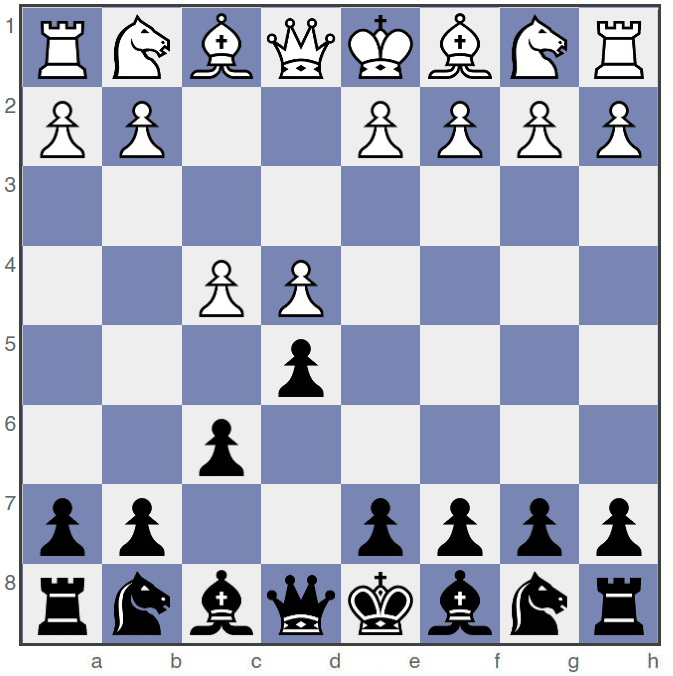
7. Slav Defence (Black)
Moves: 1.d4 d5 2.c4 c6
Black supports the d5 pawn with c6 instead of blocking the c8 bishop like in the Queen’s Gambit Declined. This is the key difference. The bishop on c8 stays free to develop, which solves one of the main problems Black faces in similar positions.
The typical plan for Black is to develop the knight to f6, then bring the bishop out to f5 or g4 before committing the e-pawn. White usually continues with Nc3 and Nf3, and the game stays relatively balanced with both sides having a clear structure to work with.
Remember that Black has slightly less space in the centre, so you need to be patient and choose your moment carefully before trying to open the position.
Best for: players who want a solid, reliable response to 1.d4 without giving up active piece play.
How to Practice and Master These Openings
Don’t try to learn all seven openings at once. Pick one for White and one for Black, and stick with them for at least a few weeks. Jumping between openings before you’ve built a feel for any of them slows your progress significantly.
When you practice, focus on understanding why each move is played, not just what the move is. After each opening move, ask yourself what it controls, what it develops, and what the next logical move should be. This builds pattern recognition that carries over into your middlegame.
For drilling, use the Lichess Opening Explorer or Chess.com’s Opening Explorer. Both are free and let you replay opening lines. See how often each move is played, and study how master-level games continue from any position.If you feel stuck and want to improve faster, then consider our personal coaching sessions where we work directly on your opening repertoire and the mistakes that keep costing you games.