
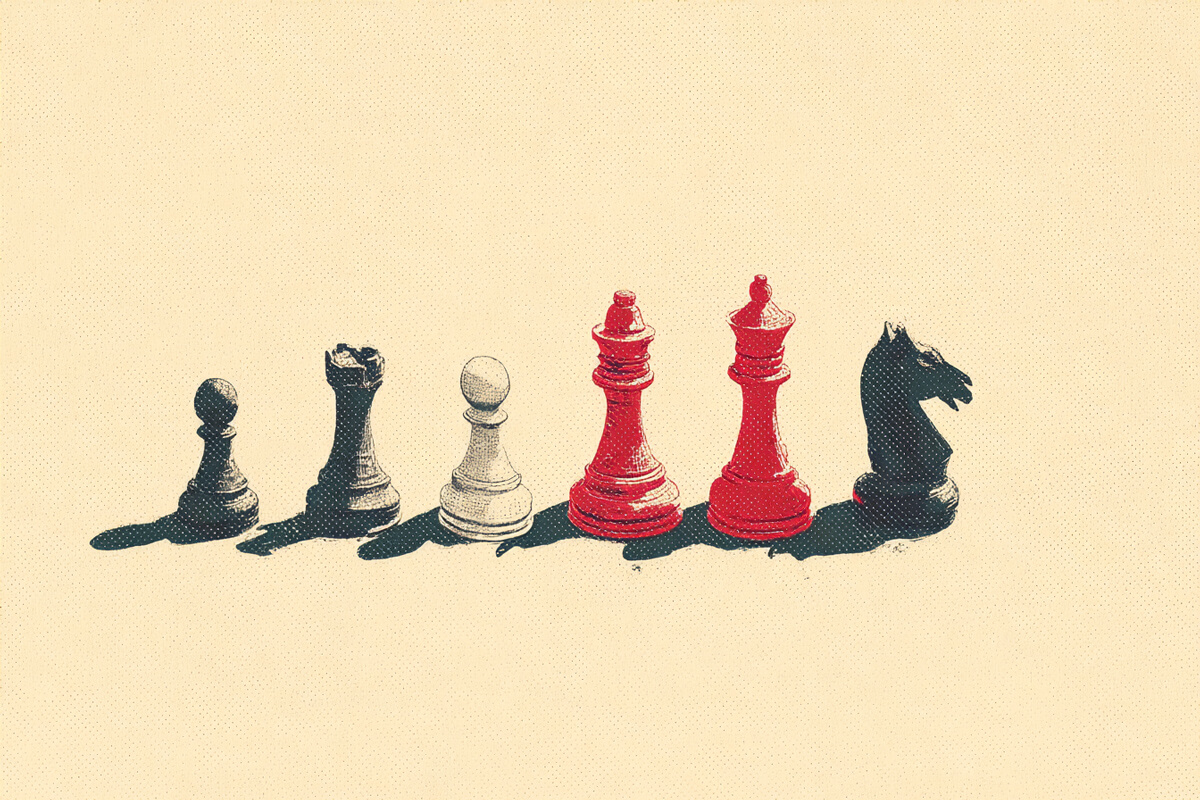
If you’ve ever watched a chess game or played a match yourself, you’ve probably heard terms that sound like a completely different language. It may start from casual phrases like “blunder” to technical jargon such as “zugzwang”. Understanding these terms can make a good improvement in your understanding of the game. For beginners, knowing chess terminology will help you communicate with other players, follow professional games more effectively, and understand coaches or other chess tutors.
In this guide, we’ve categorised the most essential chess terms to make them easy to understand and use. We have covered basic concepts to advanced tactics, and even some common slang terms.
Table of Contents
Basic chess terms
When you’re just starting with chess, it’s essential to understand the basic terms that form the foundation of the game. These terms will help you follow instructions, understand game commentary, and communicate with other players. Let’s go through the most important ones.
- Checkmate – when a player’s king is in check and there’s no legal move to remove it from danger, it’s checkmate. This ends the game, with the player whose king is checkmated losing.
- Stalemate – A position when no legal move is available while not in check. The game ends in a draw.
- Draw – any situation where neither player wins. This can happen through stalemate, threefold repetition, insufficient material, or the fifty-move rule.
- Check – an attack on the king. The player in check must make a move to remove the threat.
- Resign – to concede defeat before being checkmated. Players often resign when they believe their position is hopeless.
- Promotion – when a pawn reaches the opposite side of the board, it can be promoted to a queen, rook, bishop, or knight. Most often, players choose a queen.
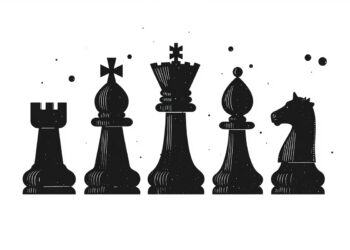
- Pawn – the most numerous and weakest piece, moving one square forward (or two squares on its first move) and capturing diagonally.
- Knight – moves in an “L” shape: two squares in one direction and one square perpendicular. It’s the only piece that can jump over others.
- Bishop – moves diagonally any number of squares. Each bishop stays on the same colour throughout the game.
- Rook – moves horizontally or vertically any number of squares. Often works in tandem with the queen or another rook.
- Queen – combines the movements of the rook and bishop. The most powerful piece on the board.
- King – moves one square in any direction. It’s the most important piece, as losing the king to checkmate means losing the game.
- Capture – removing an opponent’s piece from the board by landing on its square with your piece.
- Exchange – trading pieces of equal value. For instance, swapping a bishop for a knight.
- Illegal Move – a move that violates the rules, such as putting your own king in check. In tournaments, making an illegal move usually results in penalties.
- Opening – the first phase in chess where players develop their pieces and control the centre.
- Middlegame – the second phase of a chess game that follows the opening and precedes the endgame. In the middlegame, players develop strategies, create threats, and look for opportunities to attack or improve their position.
- Endgame – the final phase in chess only a few pieces remain. The focus shifts to promoting pawns and checkmating the opponent.
- Blunder – a serious mistake that can cost the game. Often leads to losing material or being checkmated.
- Castle – a special move where the king and rook move simultaneously for safety. The king moves two squares towards the rook, and the rook jumps over the king.
- Perpetual check – a situation where one player can continually check the opponent’s king without leading to checkmate, forcing a draw.

Chess terms for piece movements and tactical interactions
Understanding how chess pieces move and interact is crucial for making effective moves and planning strategies. In this section, we’ll cover terms related to piece movement, positioning, and interactions on the board.
- Fork – a move where a single piece attacks two or more of the opponent’s pieces simultaneously. Knights often execute forks, but pawns, bishops, rooks, and queens can also fork.
- Pin – an attack on a piece that cannot move without exposing a more valuable piece behind it. A “relative pin” involves a piece other than the king, while an “absolute pin” involves the king, making the pinned piece immobile.
- Skewer – an attack where a valuable piece is attacked first, forcing it to move and revealing a less valuable piece behind it. Often executed by bishops, rooks, or queens.
- Battery – a formation where two or more long-range pieces (like rooks or queens) are lined up on the same file, rank, or diagonal to increase their attacking potential.
- Discovery (Discovered Attack) – an attack revealed when a piece moves, unblocking another piece behind it. If the revealed attack targets the king, it’s called a “discovered check.”
- Double Attack – a move that attacks two targets at once. A fork is a type of double attack.
- Sacrifice – deliberately giving up a piece to gain a strategic or tactical advantage, often aiming for checkmate or a better position.
- En Passant – a special pawn capture that occurs when a pawn moves two squares from its starting position, and an opponent’s pawn that could have captured it had it moved only one square may capture it as if it had moved one square. This must be done immediately after the pawn moves two squares.
- Fianchetto – positioning a bishop on the second rank (b2 or g2 for White; b7 or g7 for Black) after moving the adjacent pawn (b3 or g3 for White; b6 or g6 for Black). This setup places the bishop on a long diagonal, increasing its range.
- Back-Rank Mate (Corridor Mate) – a checkmate delivered by a rook or queen along the opponent’s back rank when the opponent’s king is trapped by its own pawns.
- Passed Pawn – a pawn with no opposing pawns to stop its progress to the promotion square. Passed pawns are valuable in the endgame.
- Isolated Pawn – a pawn that has no friendly pawns on adjacent files, making it harder to protect.
- Doubled Pawns – two pawns of the same colour occupying the same file, usually as a result of a capture. Doubled pawns are generally considered a weakness.
- Opposite-Coloured Bishops – a situation where each player has a bishop that moves on squares of opposite colours. In the endgame, this often leads to drawn positions, even with a material imbalance.
- Deflection – a tactic used to force an opponent’s piece away from a critical square or duty.
- Windmill – a combination that involves a series of checks and captures, usually with a rook and bishop working together.
Chess terms for game phases and strategies
Chess games are divided into three main phases: the opening, the middlegame, and the endgame. Each phase has its own strategies and terminology. Understanding these terms will help you make better decisions during different stages of a game.
Terms for the opening concepts
- Development – moving pieces from their starting positions to more active squares.
- Control of the centre – placing pawns and pieces in the central squares (d4, d5, e4, e5) to dominate the board.
- Gambit – sacrificing a pawn in the opening to gain a positional advantage.
- Tempo – a unit of time in chess; gaining tempo means forcing your opponent to waste moves.
- Initiative – the ability to make threats that force the opponent to respond.
Middlegame Concepts
- Mobility – the freedom of your pieces to move around the board.
- Space – the amount of territory controlled by your pieces. More space usually means more mobility.
- Counterplay – finding ways to create threats even when on the defensive.
- Piece coordination – ensuring your pieces support each other and work towards a common goal.
- Cramped position – a situation where your pieces are restricted in movement.
Endgame Concepts
- Opposition – a situation where two kings face each other on the same rank or file with one square between them. The player not having to move is said to “have the opposition.”
- Triangulation – a manoeuvre to lose a tempo and put the opponent in zugzwang.
- Lucena position – a fundamental rook endgame technique for promoting a pawn.
- Philidor position – a defensive technique in rook endgames to hold a draw.
- King activity – in the endgame, the king becomes an active piece and participates in the fight.
- Zugzwang – a situation where any move a player makes will worsen their position. Often seen in endgames, zugzwang forces the opponent to make a disadvantageous move.
Chess slang and phrases (casual and online language)
Chess players, especially in casual and online environments, often use slang and informal phrases to describe situations or moves. Understanding these terms can help you communicate more naturally with other players and follow online game commentary.
- Blunder – a major mistake that drastically changes the outcome of the game, usually leading to a loss of material or checkmate.
- Howler – a particularly bad blunder that makes experienced players cringe.
- Woodpusher – a derogatory term for a weak or inexperienced player.
- Patzer – another term for a weak player, often used when someone makes simple mistakes.
- Fish – a player who is easy to beat, often because they lack basic chess knowledge.
- Flagging – winning on time when your opponent’s clock runs out, especially in blitz or bullet games.
- Sandbagging – intentionally losing games to lower your rating, then playing in tournaments at a lower level to win prizes.
- Mouse slip – a mistake made during online play where a piece is moved to an unintended square, often due to dragging the piece incorrectly.
- Cheapo – a sneaky tactical trick aimed at catching the opponent off guard, often resulting in a sudden win or material gain.
- Swindle – a desperate attempt to turn a losing position into a win or draw by tricking the opponent.
- Flag – running out of time on the clock, especially in fast-paced games.
- Ladder Mate – a checkmate pattern where two rooks work together to drive the opponent’s king to the edge of the board.
- Opening trap – a deceptive move or sequence aimed at tricking an opponent into making a mistake in the opening phase.
Final word
These were all the chess terms that every beginner should know. I hope you now have a much better understanding of what’s happening on the board, making it easier to communicate with fellow chess players. If you’re interested in learning more about the game and you’d like some chesss coaching, get in touch and we can match you with a coach to help fast track your progress.