
Pawns are the smallest and least valuable pieces in chess, but they are fundamental to every game. Each player starts with eight pawns, positioned in front of their other pieces. While a single pawn may not seem important, together they form the backbone of a player’s strategy.
Chess players use pawns to control space, create structure, and support stronger pieces. Pawns shape the course of the game, from the opening to the endgame, where they can become even more powerful through promotion.
Despite being worth only one point, pawns often decide the outcome of a game. Mastering their role is essential for improving at chess, as strong pawn play leads to better positioning, stronger attacks, and winning endgames.
Table of Contents
How does a pawn move in chess
“The Pawns: They are the very Life of this Game.”
Francois-Andre Danican Philidor
They always move forward and can never move backwards. Each pawn can advance one square forward at a time, except for its very first move.On its first move, a pawn has the option to move one or two squares forward. This special rule allows players to develop their position faster in the opening phase. However, after the first move, the pawn can only advance one square per turn.

What happens if the pawn reaches the end of the board
If a pawn reaches the last rank on the board (the eighth rank for White or the first rank for Black), it cannot move any further. Instead, it must be promoted to another piece (Rook, Knight, Bishop or Queen). We won’t focus in this article on pawn promotion, as we have a detailed post that explains the pawn promotion rules.
Capturing with Pawns
Pawns capture differently from how they move. Instead of moving straight forward, they capture diagonally. A pawn can take an enemy piece if it is positioned one square diagonally in front of it, either to the left or right.Unlike other pieces, pawns cannot capture straight ahead. If an opposing piece is directly in front of a pawn, the pawn is blocked and cannot move forward until the obstacle is removed.

If it is White to move, then the d4 Pawn can capture the Black Pawns on c5 or e5.
This unique way of capturing makes pawns essential for controlling key squares and supporting other pieces in attacks. Proper pawn play helps open up positions and create tactical opportunities in the game.

The “en passant” Capture
“En passant” is a French term meaning “by passing” that is internationally accepted and used in the chess world. The en passant rule is a special pawn capture that only occurs under specific conditions. This rule prevents a pawn from bypassing an opposing pawn’s control when it moves two squares forward from its starting position.
When Can En Passant Happen?
En passant is only possible when:
- A pawn moves two squares forward from its starting position in a single move.
- It lands next to an opponent’s pawn (on an adjacent file).
- The opponent chooses to capture it immediately on the very next move.
If these conditions are met, the opponent’s pawn can capture the moving pawn as if it had only moved one square forward. This is the only situation in chess where a piece is captured without occupying its square. Example of En Passant.
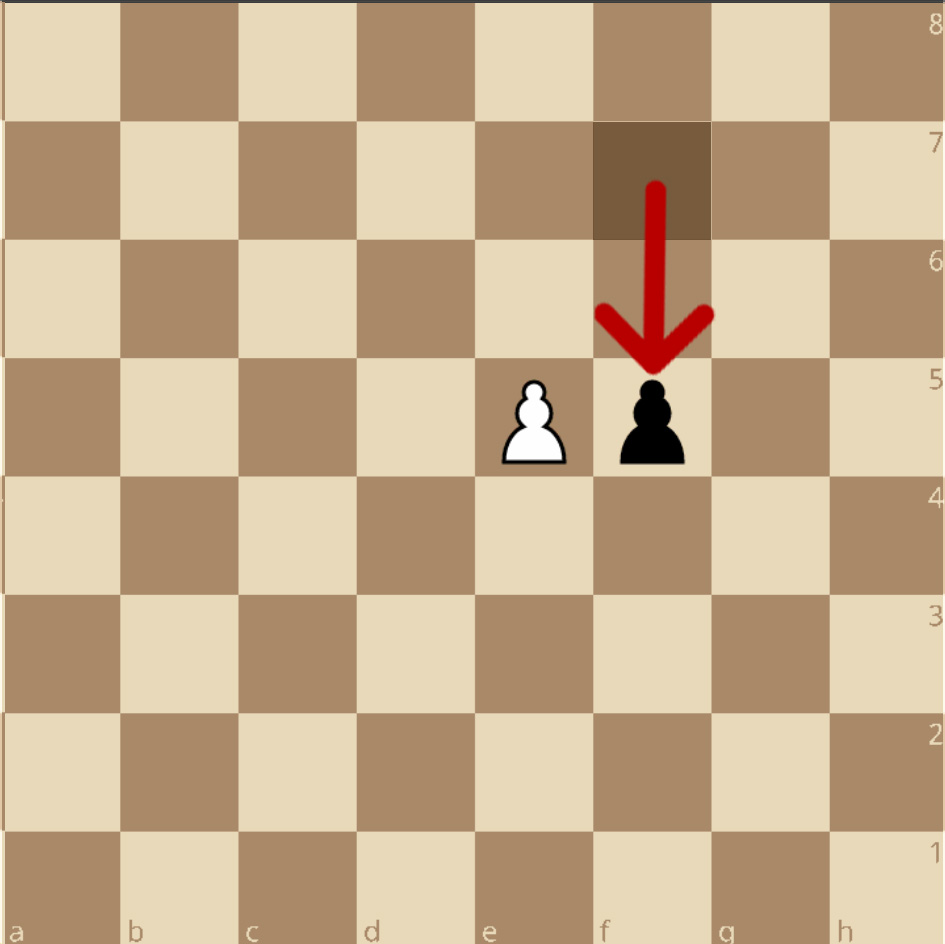
On the example above we have a White pawn on e5, and Black moves a pawn from f7 to f5. The Black pawn lands directly next to the White pawn. White now has the option to play exf6, capturing the Black pawn.

However, this move must be played immediately. If White plays another move instead, the opportunity to capture en passant is lost. But keep in mind that this is an optional capture, if the position is not worth it, you can skip En Passant.
Why Does En Passant Exist?
The rule was introduced to prevent players from bypassing pawn structure by jumping forward two squares. Without en passant, a pawn on the fifth rank could be blocked from attacking simply because the opponent avoided stepping into its control zone.
Final word
Pawns may seem like simple pieces, but they play a critical role in the game. Strong pawn play can create powerful attacks, secure key positions, and even decide the outcome of the game. Here are some important insights on how to use them effectively:
- Control the centre – moving pawns to the centre (such as d4 and e4) gives your pieces more space and flexibility.
- Support your other pieces – pawns act as a shield for your stronger pieces, helping them stay active while limiting your opponent’s moves.
- Think ahead before moving – since pawns cannot move backward, every push is permanent. A well-placed pawn structure can be an advantage, but careless moves can create weaknesses.
- Use pawn chains – connected pawns supporting each other (remember how they capture diagonally) are harder to attack and create strong defensive formations.
If you have mastered this lesson, then let’s continue to the next page so we can learn how the bishop moves.