


The king is the most important and vulnerable piece in chess. In terms of strength, it is not the most powerful piece, so during the opening and middle game phase, you should aim to protect and not put it in danger.
Table of Contents
How does the King Move and Capture in chess
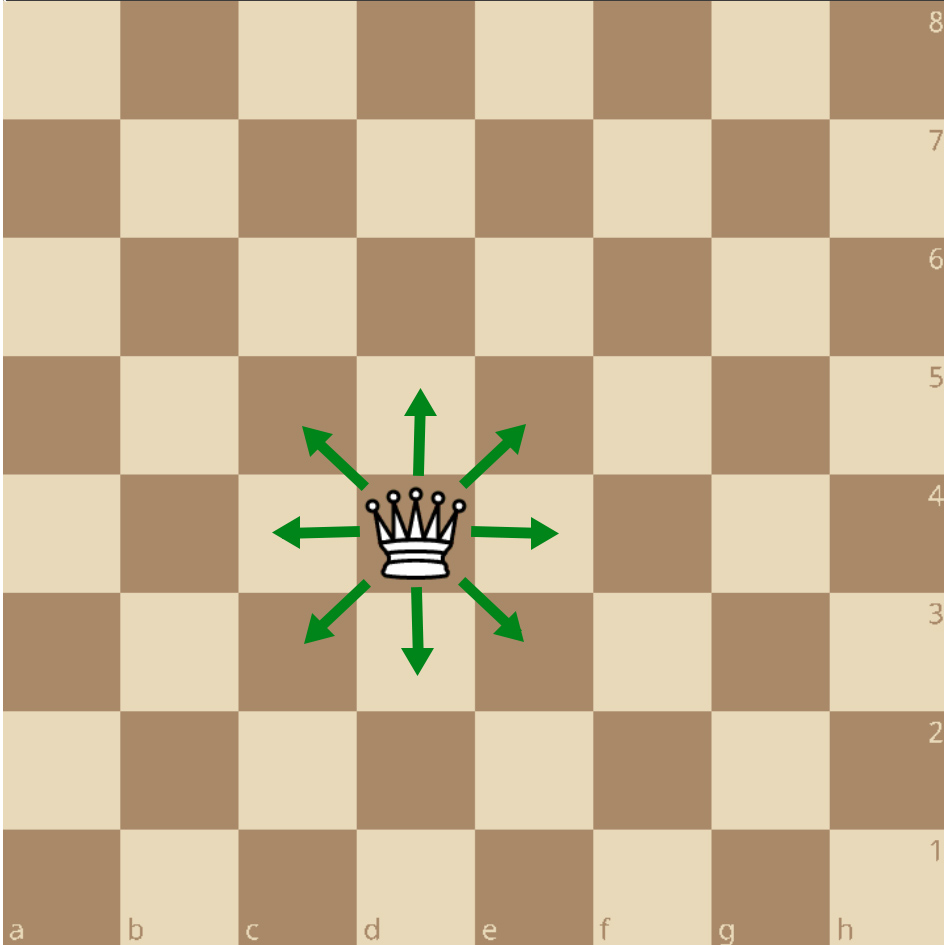
The King moves like the Queen, with the difference being that it can only move one square at a time. It can move to any square around him, provided that the square is not occupied by one of its own pieces or that an enemy piece is not attacking the square. While in the latter part of the game it can become a great attacking price, as we will see in lesson 4 about the basic rules of chess, it cannot capture an enemy piece when it is protected, as one of the rules states that a player cannot allow their King to be captured.
White and Black kings can never be face to face in a game of chess: at least one square must separate them. It is logical since if a King advances on any square adjacent to the other King, the opponent will have the first opportunity to capture. It therefore does not make sense to allow such a move in the first place.
The King cannot jump over other pieces. Also, since it is so vulnerable to attacks, it will not be used at the beginning of the game. Wise players only use their king only in the endgame phase when several pieces are removed from the board.
Both players can also use a special move involving the King: the “castle” (we can say also castling). We discuss this special move in lesson 5 where we study the advanced rules. But in short, castling serves two critical purposes: it moves your king to safety and brings your rook into play simultaneously. The move allows your king to move two squares towards a rook whilst the rook jumps over the king to the adjacent square. This exceptional move can only be performed once per game and requires that neither the king nor the involved rook has moved previously, no pieces stand between them, and the king is not in check or moving through checked squares.
As is the case for the Queen, the King deploys its best action when occupying the center of the board. We can see in the diagram below that it controls 8 squares in the center, 5 squares on the edge and 3 squares in a corner (controlled squares are colored in green).

Essential moves and strategy when The King is in check
When your king is under direct attack by an enemy piece, it is in ‘check’. This situation demands immediate attention as chess rules require you to address the check on your next move.
When your king is in check, you have precisely three options to resolve this precarious situation:
- Move the king to a safe square where it is not under attack. Remember that the king can move only one square in any direction, and you must ensure the destination square is not controlled by any enemy piece. Also, try to visualise ahead if the square that you aim to choose is really that safe.
- Capture the attacking piece with your king or another piece. If the attacking piece is adjacent right next to your king and unprotected, your king may capture it. Alternatively, any of your other pieces can capture the attacker if positioned to do so.
- Block the check by placing one of your pieces between the attacking piece and your king. This option is only viable against attacks from bishops, rooks, or queens, as knights and pawns cannot be blocked in this manner.
The pitfalls of double check
A particularly dangerous situation arises when your king is attacked by two different enemy pieces simultaneously — a ‘double check’. In this challenging scenario, your options become severely limited:
- You cannot block both attacking pieces with a single move
- You cannot capture both attackers at once
- Your only recourse is to move your king to a safe square
This highlights why a double check is often a potent tactical weapon in chess, frequently leading to decisive advantages or even checkmate.

What happens when the King is in checkmate
While a check can be resolved through the three methods described above, checkmate occurs when a king is in check and has no legal move to escape. When your king is in checkmate, the game ends immediately with your defeat.
How should the King move in the end game
“The king, which during the opening and middlegame stage is often a burden because it has to be defended, becomes in the endgame a very important and aggressive piece, and the beginner should realize this, and utilize its king as much as possible.”
Jose Raul Capablanca
In the opening and middlegame phases, a wise player keeps their king tucked away safely, typically behind a castled position with protective pawns. However, as the game transitions to the endgame and the number of pieces decreases, the king’s limited mobility becomes less of a liability. With fewer enemy pieces to deliver check, your king can and should step forth from its protective position.
An active king in the endgame offers several critical advantages:
- Support for pawn advancement. The king becomes an excellent escort for passed pawns, helping them navigate safely to promotion.
- Defence against enemy pawns. Your king can effectively block or capture opposing pawns that threaten to promote.
- Direct combat capability. In endgames with few pieces remaining, the king becomes stronger than knights and bishops in many situations, as it can both attack and defend squares in its vicinity.
- Control of key squares: The king can occupy or contest important central and critical squares, denying them to the opponent’s pieces.
Final word
Remember that chess is a journey of continuous learning. Now that you’ve gained insights into the king’s movements across all phases of the game, we encourage you to put this knowledge into practice. Analyse your own games to identify missed opportunities for king activation in endgames or moments when your king’s safety was compromised during the opening or middlegame.
Ready to deepen your chess understanding further? Below you can find other series of chess lessons.