


“Chess is 99% tactics.”
– Rudolph Teichmann
We already had the chance to be introduced to the fork tactic in the discovered attack lesson. The fork is a tactic in which a piece attacks several enemy pieces at the same time. This maneuver usually gives a material advantage to the player that executes it. This tactic is available to all pieces.
Let’s see together how to make forks with each of them.
Table of Contents
How to do a Fork with the Knight
A lot of beginners are scared by the Knight because of its possibility to surprise the opponent with forks. One of the biggest advantages for the Knight is that enemy pieces are often forced to move out of danger when attacked by a Knight (unless the attacked piece is another Knight). This allows the Knight to be more effective than the other pieces to do forks. Here are some examples of forks given by a Knight:


given by a Knight
As we can see in the second example, we call the “royal fork” a fork attacking both the King and the Queen.
It is true to say that Knight forks could catch a player by surprise. However, since a Knight cannot control squares of different colours at the same time, a way to protect yourself from being surprised is to put your heavy pieces on squares of different colours while an enemy Knight is galloping around.
How to do a Fork with the Bishop
The Bishop can attack up to 4 pieces simultaneously, but a Bishop’s fork usually involves only two enemy pieces. If a Bishop attacks more than two pieces, it means that it was already doing a fork on the previous move and the opponent did not deem it necessary to put an end to it. The Bishop’s capacity to make forks are less efficient than the Knight’s since it is forced to always occupy squares of the same colour. A player could then eliminate all fork possibilities against a Bishop by placing his pieces on squares of the opposite colours than the Bishop. Here are some fork examples given by the bishop:

two Rooks given by a Bishop
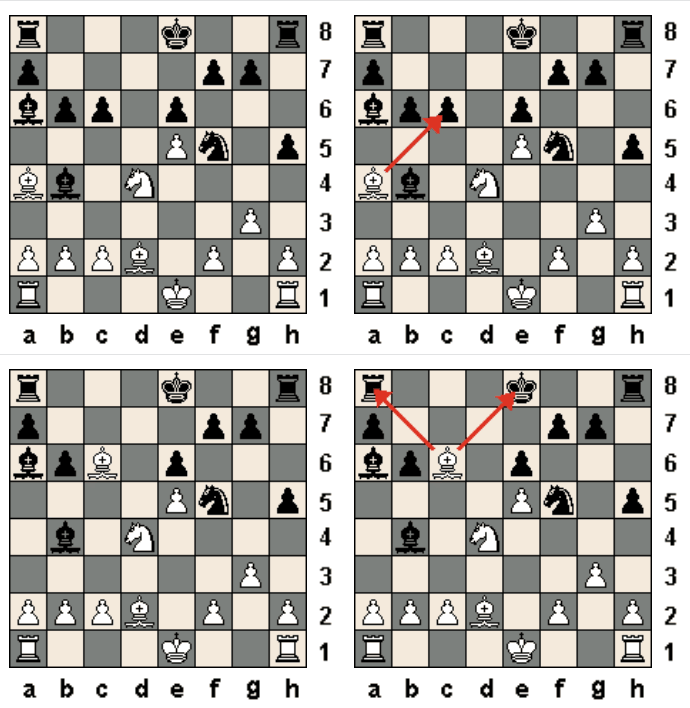
involving the enemy King
Take note of the last example. A Bishop’s fork involving the King and a Rook still sitting on their starting squares is quite common.
How to do a Fork with the Rook
As is the case with the Bishop, even if the Rook can attack four pieces simultaneously, a Rook’s fork usually involves two enemy pieces. It is more difficult to defend against Rook forks since they control both colours of the chessboard.
Here are some examples of forks created by the Rook:

given by a Rook
In the above example, the Rook threatens the g1 Bishop and the Pawn on g6 at the same time. However, as we saw in the previous page on discovered attacks, Black can save himself by playing the in-between move 1, Bd4+. White must then take care of the check and Black could protect his g6 Pawn on the next move. This example shows that we always have to look for all defending possibilities prior to responding too rapidly to a direct threat.
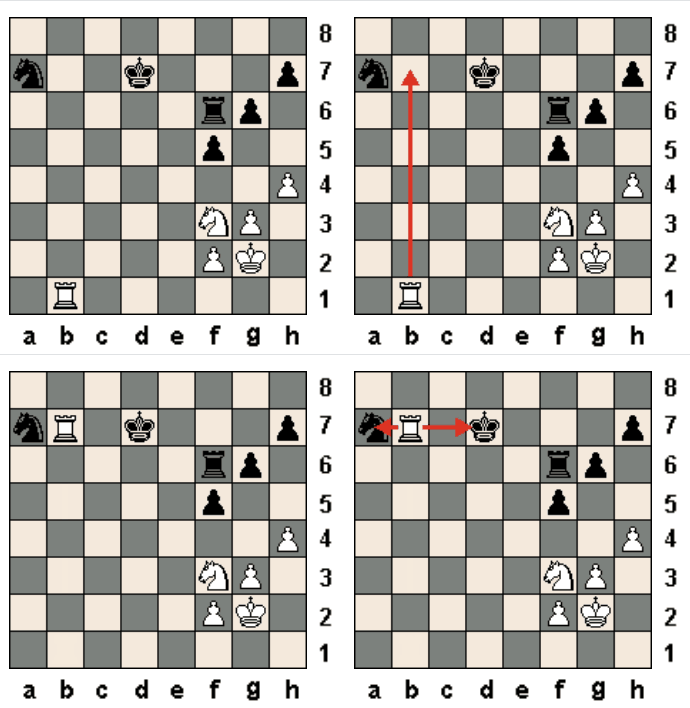
involving the enemy King
The Rook is usually efficient in making forks during the endgame as there is more room on the board.
How to do a Fork with the Queen
The Queen, combining the movement of both the Bishop and the Rook, finds it much easier to create forks. The Queen can be truly devastating with forks when it has sufficient space to manoeuvre on the board. Here are some examples of forks created by the Queen:

fork given by a Queen
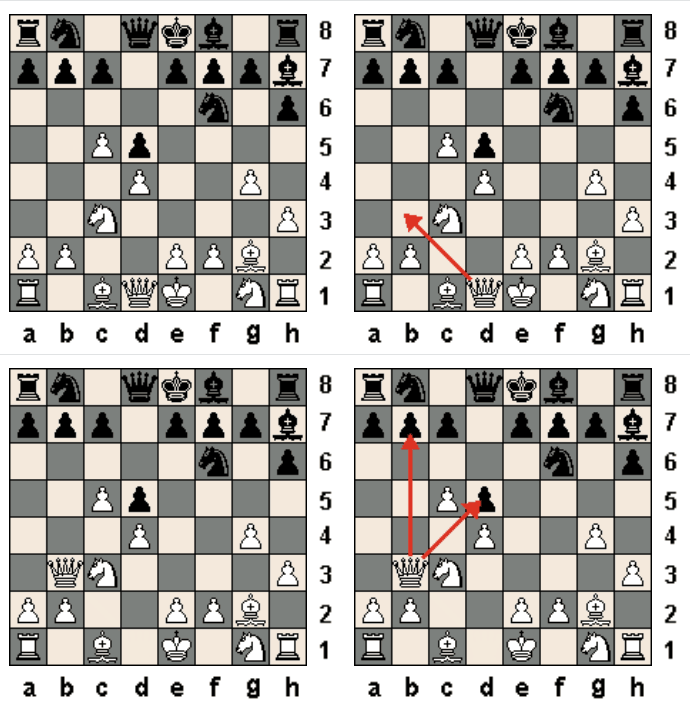
in the beginning of the game
In the last example, the fork is not really obvious as the d5 Pawn is protected. But if we observe the position carefully we see that the d5 Pawn is protected two times (by the Queen and the f6 Knight) and attacked two times by White (by the c3 Knight and the Bishop on g2) prior to the queen move. By moving on b3, the queen becomes the third attacker on d5 and attack also the b7 Pawn which is not protected at all. Black can only give support to one of the Pawns.
How to do a Fork with the King
The King can also give forks, even though it is more predictable because of its slow pace. Here are some examples of forks given by the King:

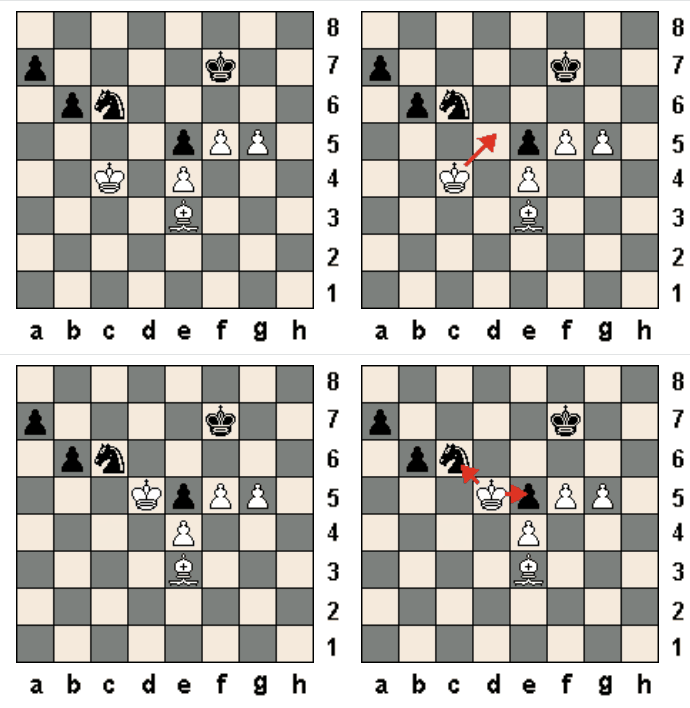
How to do a Fork with the Pawn
The Pawn is the most economical way to make forks. Indeed, being the piece with the less value on the chessboard, players will hesitate to exchange an enemy Pawn for a piece of greater value. Let’s see some examples of forks given by Pawns:


By adding the fork to your tactical arsenal, you will have several opportunities to gain material advantages in your own games. Stay alert as you can also be caught by this tactic!